
Natural Disaster Trauma
Houston, Texas, is a fantastic city. Over 2 million people live here, speaking 145 different languages. It’s home to NASA’s Johnson Space Center and has more than 10,000 restaurants with food from all over the world.
But things are not always rosy in Houston. The Greater Houston area has been in the eye of many destructive storms and natural disasters. FEMA has declared a disaster 26 times in the past 41 years here.
The worst was the Great Galveston Storm in 1900, which killed more people than any other natural disaster in U.S. history. More recently, we’ve had Hurricane Harvey in 2017, Winter Storm Uri in 2021, and Hurricane Nicholas in 2021.
These disasters flooded the city and left many people scared, upset and unable to live normally again. Even pets were affected, too.
These storms can cause severe trauma and stress, ultimately leading to PTSD, where even seemingly little things like rain on the roof can remind you of the incident — a source of great emotional discomfort.
If you or anyone you know is dealing with this kind of trauma, you may want to consider trying EMDR therapy. It’s relatively new but can be more effective than conventional therapy methods.
This blog post explains what EMDR therapy is and how it’s helped accelerate trauma healing in Bayou City, especially in the wake of Hurricane Harvey.
EMDR Therapy Online
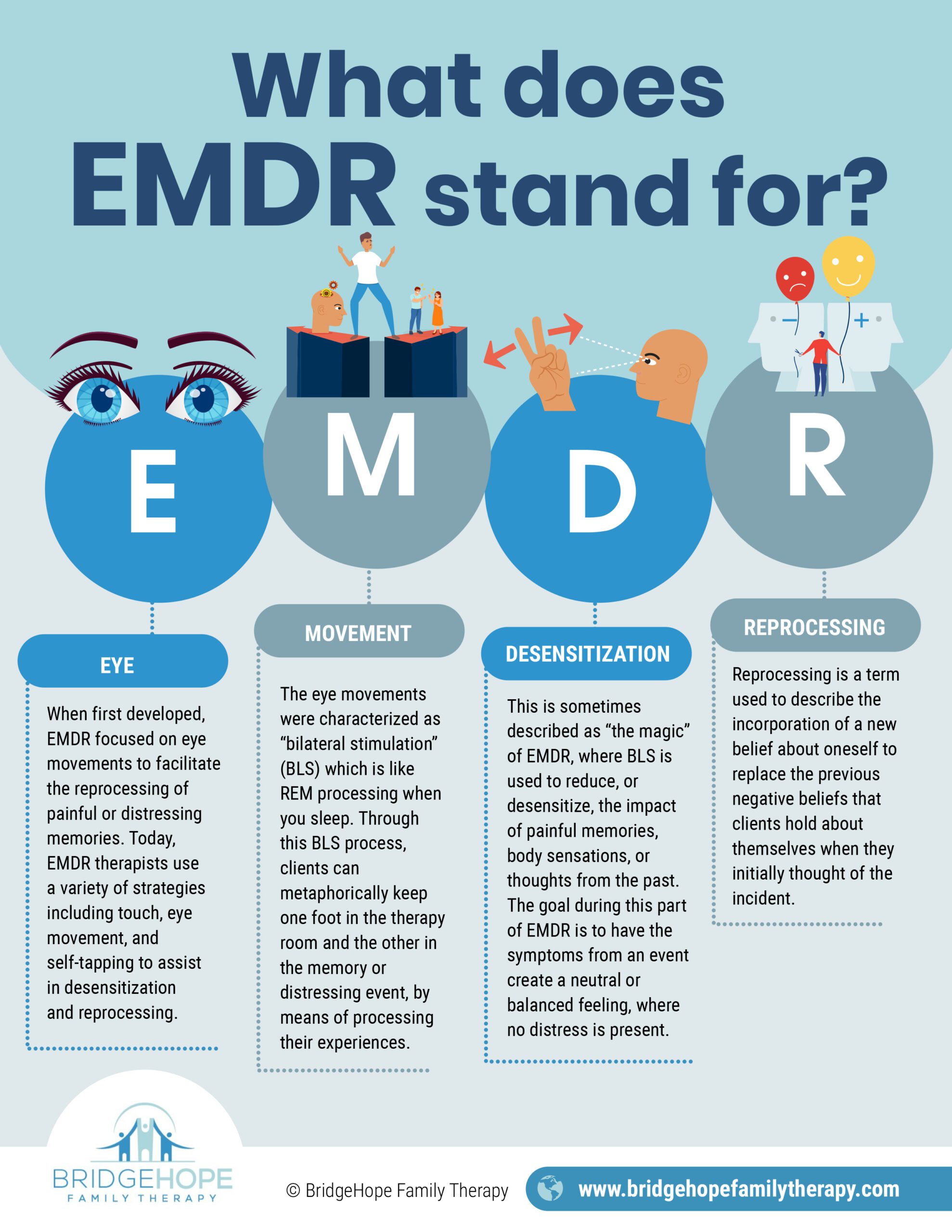
If you want to learn more about EMDR, visit here and here. In brief, EMDR or Eye Movement Desensitization and Reprocessing (EMDR) might sound like something from the future, but it’s a straightforward approach to treating trauma that’s been gaining traction since the 1980s. It is a psychotherapy technique made to help individuals process and heal from traumatic memories. Many studies have said EMDR therapy effectively treats PTSD when it is done for three months. Better yet, EMDR has been shown to be effective both online and in person.
How it works
Slowly read the full meaning of EMDR again, with intent — and you may see the central idea behind how it works.
‘Desensitization’ helps reduce the emotional intensity of the tragic memory so you don’t have to shudder in fear every time you think of the weather or any other trigger.
‘Reprocessing’ teaches you how to reframe these memories and the emotions connected to them, making memories that previously caused immense pain much more manageable. Same memory but with less emotional intensity.
Unlike traditional talk therapy or medication, EMDR therapists use bilateral stimulation to help clients desensitize and reprocess.
Let’s break down what bilateral simulation really means.
Bilateral stimulation
A core component of EMDR therapy, bilateral stimulation involves activating both sides of the brain one at a time.
If you could see a monitor (like an fMRI) displaying your brain during EMDR, you’d notice both sides of your brain lighting up.
Simply speaking to your therapist will not stimulate your brain this way. Only under guided instructions from your therapist, who will use a controlled approach, is it possible to activate bilateral stimulation.
As of today, the most common methods to stimulate the two sides of the brain include:
Eye movements
Moving the eyes back and forth with the help of a device.
Tactile stimulation
Tapping on alternate sides of the body.
Auditory stimulation
Listening to alternating sounds in each ear.
For disaster-related trauma, EMDR has changed the game
Is EMDR effective for people who have experienced disaster in Houston? The short answer is YES.
Dozens of research studies and controlled studies say EMDR works. This particular research, which studied other bodies of work on EMDR, identified the procedure as very effective.
Seven of ten studies in the same research noted that EMDR is “more rapid or otherwise superior” to CBT (cognitive behavioral therapy.)
EMDR’s incredibly efficient approach to trauma healing has earned it a ‘best practice’ tag from the Department of Veteran Affairs and Defense in the United States.
Though EMDR therapy can go on for 12 sessions, one study has shown that 84–90% of single-trauma victims no longer have PTSD after three 90-minute sessions.
A Houston Success Story
A few years back, after the damage Hurricane Harvey brought, Sarah—a fine Houston resident—experienced severe PTSD symptoms. Her awareness was particularly heightened whenever she saw a dark cloud in the sky. It was difficult to drive, let alone go outside. For people like Sarah, EMDR can create a dramatic reduction in symptoms and negative experiences. This is just one example of the potential for EMDR treatment.
EMDR is an asset to Houston, TX
As climate-related disasters become more frequent, the need for practical, efficient trauma treatment grows.
EMDR could be the tipping point that allows Houston and similar communities to recover faster and stronger from future catastrophes.
Disaster recovery doesn’t need to take longer than it should. EMDR therapy offers a less turbulent path for Bayou City to build its shared and personal disaster resilience, enabling it to stand taller than nature’s more violent forces.
Online therapy Houston TX
EMDR’s story in Houston, TX, is more than an innovative therapy technique. It’s a testament to human resilience and the power of scientific innovation. As Houston recovers and prepares for future challenges, EMDR is a treatment that can reshape the city’s psychological landscape, one session at a time.
If you or anyone you know might benefit from EMDR’s trauma-correcting powers, you can schedule a free consultation with us at BridgeHope Family Therapy here, and let’s discuss next steps.
Check out the rest of our website for more resources that could help you heal better.